Introduction to financial crime
This course gives your team a clear understanding of serious financial crime threats and how they impact hospitality and gaming venues. It equips staff with the knowledge to identify risks early, respond appropriately, and support compliance obligations.



Course overview
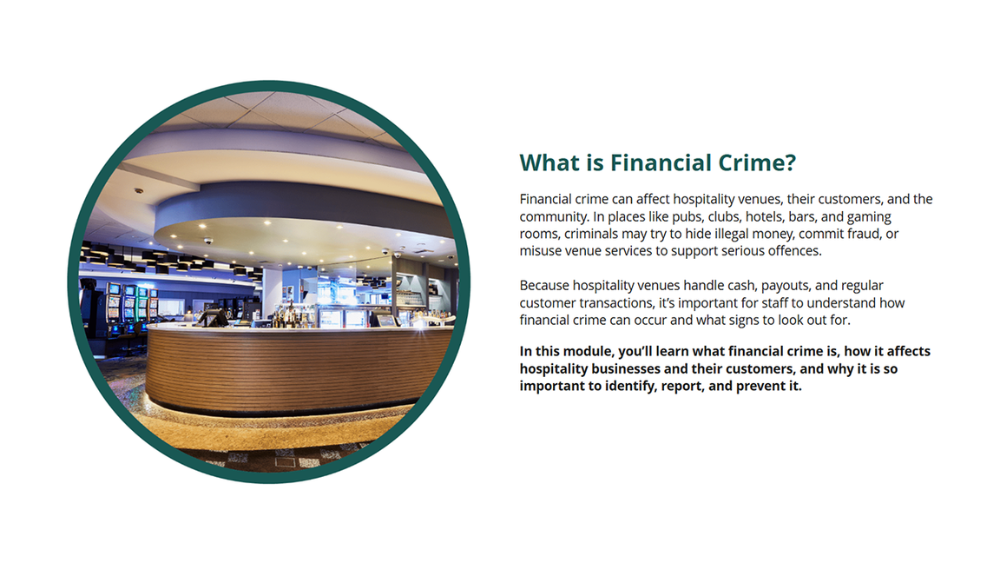
Financial crime is a growing risk across Australia’s hospitality and gaming sectors. Venues such as pubs, clubs, casinos, bars, hotels, bottle shops, and any business handling cash, gaming machines, payouts, loyalty programs or financial transactions can be targeted by criminals. These environments can be misused to hide the origins of illicit funds, cash out proceeds of crime, or facilitate activities linked to organised crime.
Languages
Available in English
What you’ll learn
This course will give you a clear and practical understanding of what financial crime is, how it can occur in hospitality settings, and the crucial role your venue plays in identifying, reporting and preventing it. You’ll also learn how AUSTRAC works with industry and law enforcement to protect Australia’s financial system through regulation, intelligence, and compliance monitoring.
Why choose this course?
- Understand what money laundering and terrorism financing (ML/TF) are
- Identify how criminals may misuse hospitality and gaming venues
- Recognise common warning signs of suspicious financial activity
- Understand the impacts of financial crime on businesses and communities
- Learn your responsibilities in detecting and managing risks in your role
- Identify when and how to escalate or report concerns
- Understand the role of AUSTRAC in regulating financial crime
Legal context
Australian businesses must comply with financial crime laws designed to prevent money laundering, terrorism financing, and fraud. The Anti-Money Laundering and Counter-Terrorism Financing Act 2006 requires businesses to verify customers, monitor transactions, and report suspicious activity. Recent reforms under the AML/CTF Amendment Act 2024 expand these obligations to more industries and strengthen regulation of digital assets.
Additional laws such as the Proceeds of Crime Act 2002, Criminal Code Act 1995, and Corporations Act 2001 support enforcement by defining offences, enabling asset seizure, and addressing corporate misconduct. Training helps businesses meet these obligations and reduce regulatory risk.