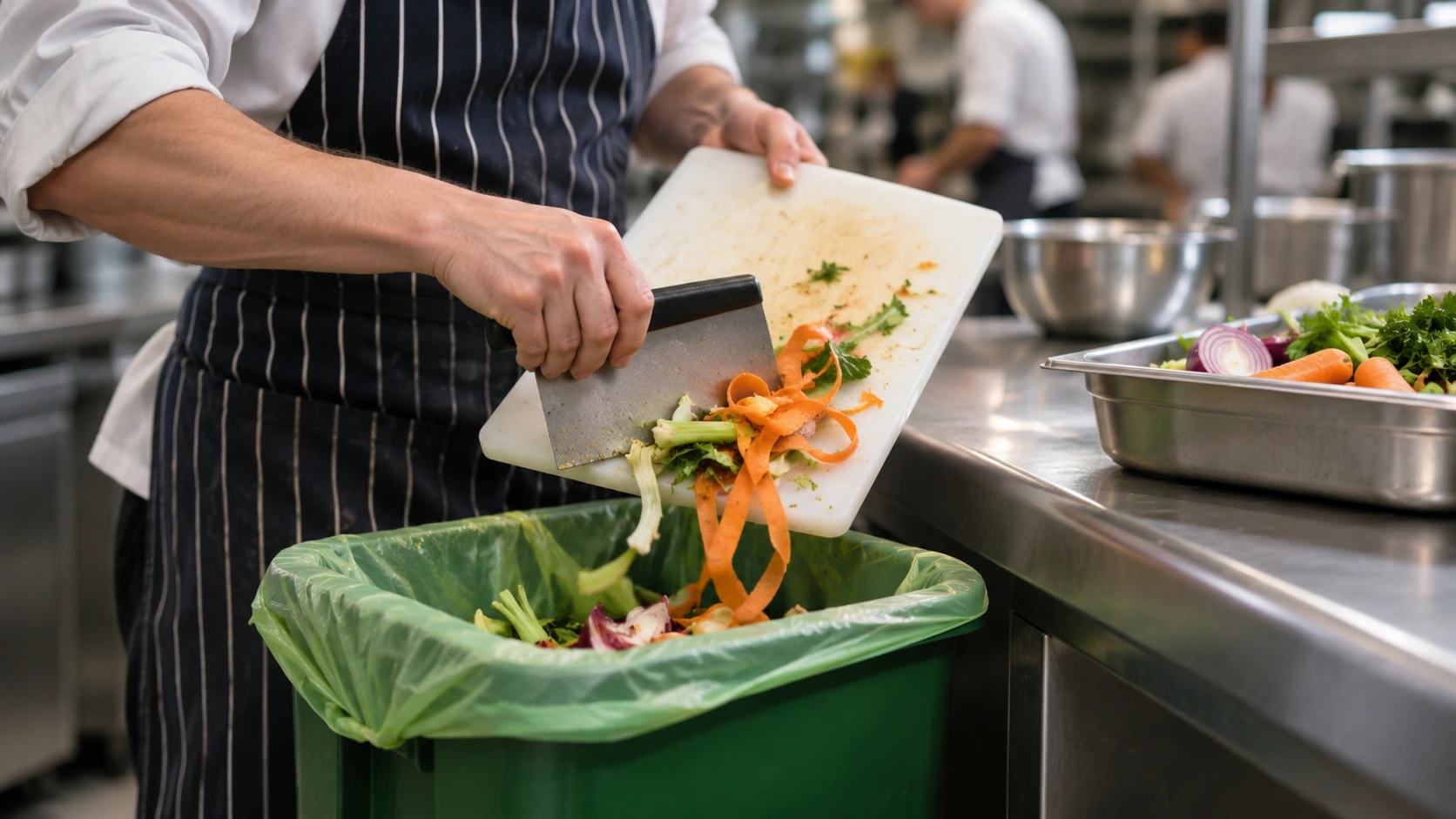
NSW's food waste separation mandate is now in effect for larger hospitality businesses, with more venues required to comply from July 2028 and July 2030. For restaurants, cafés, pubs, clubs and hotels, the changes mean introducing separate food waste collection systems and ensuring staff know how to use them.
Here's what hospitality operators need to know about the deadlines, requirements and practical steps to prepare their venues.
What is the NSW FOGO mandate?
The NSW Government has introduced mandatory food waste separation requirements to reduce the amount of organic waste sent to landfill.
The legislation is commonly referred to as the Food Organics and Garden Organics (FOGO) mandate, but there is an important distinction for businesses.
While households will progressively receive combined Food Organics and Garden Organics (FOGO) collection services, affected hospitality businesses are required to separate Food Organics (FO) from general waste.
This means food scraps and other accepted food waste must be collected separately rather than disposed of with general rubbish.
The requirements are being introduced in stages, giving smaller businesses additional time to prepare.
When does your hospitality venue need to comply?
The NSW business mandate commenced on 1 July 2026, starting with venues that have the largest weekly general waste bin capacity.
The rollout follows three stages:
| Compliance date | Weekly general waste bin capacity |
|---|---|
| 1 July 2026 | 3,960 litres or more, including six 660L bins or 16 240L bins |
| 1 July 2028 | 1,980 litres or more, including three 660L bins or eight 240L bins |
| 1 July 2030 | At least one 660L bin, three 240L bins, or a combination totalling 720 litres or more |
The thresholds are based on general waste bin capacity, not simply the amount of food waste your venue produces.
For example, a restaurant with six 660-litre general waste bins collected weekly falls within the first stage of the mandate. A smaller café with three 240-litre bins collected weekly falls within the 2030 stage.
Businesses should check their bin sizes, collection arrangements and any applicable exemptions to determine their obligations.
The NSW Environment Protection Authority (EPA) provides a FOGO business mandate calculator to help businesses identify their compliance date.
Which hospitality businesses are affected?
The mandate applies to a range of premises where food or drink is prepared or provided, including:
- Restaurants, cafés and takeaway food businesses
- Pubs, bars and registered clubs
- Hotels and motels
- Catering businesses and commercial kitchens
- Food courts and food halls
Not every venue is required to comply immediately. The relevant start date depends on the premises, its weekly general waste bin capacity and any applicable exemptions.
Businesses operating across multiple venues should assess each location individually rather than assuming the same deadline applies across their entire group.
What must hospitality venues do?
Affected businesses must establish a separate food organics collection service.
Under the NSW requirements, venues must:
- Provide sufficient food organics bins for the food waste generated.
- Keep collected food organics separate from non-organic waste during transport.
- Arrange for food organics waste to be collected at least once per week.
In practice, this means reviewing existing waste collection arrangements, ensuring suitable bins are available and introducing clear processes for staff.
For busy hospitality kitchens, the system needs to work during everyday service, not just when the venue is quiet.
What can go in a Food Organics bin?
Correct separation is essential to prevent contamination and ensure collected food waste can be processed appropriately.
According to the NSW EPA, accepted food organics include:
- Fruit and vegetable scraps
- Meat, fish and bones
- Dairy products
- Bread and other food leftovers
- Food preparation scraps and plate waste
Certain kitchen caddy liners are also accepted, including fibre-based liners and compostable plastic liners that meet the relevant Australian Standards for commercial composting.
General rubbish, packaging and other non-food materials must be kept out of Food Organics bins.
Venues should confirm accepted materials with their waste collection provider, particularly when selecting bin liners and setting up collection arrangements.
How to prepare your hospitality venue
Introducing food waste separation does not need to involve a complicated new process. The priority is to make correct disposal easy for staff during everyday operations.
1. Review your current waste arrangements
Check the sizes and collection frequency of your general waste bins to establish when the mandate applies.
Speak with your waste contractor about separate food organics collection, suitable bin sizes and collection schedules.
2. Position bins where food waste is generated
Place clearly identified food waste bins near food preparation benches, kitchen workstations and dishwashing areas.
Consider how staff move through the kitchen during service and avoid placing bins where they create congestion or manual handling difficulties.
3. Use clear signage
Staff need to know what belongs in each bin.
Simple signage with examples of accepted and excluded materials can help prevent contamination, particularly in kitchens with multiple workstations or frequently changing teams.
4. Train staff on the separation process
Everyone handling food waste should understand the venue's system, including kitchen staff, kitchen hands and other employees responsible for clearing plates or disposing of food scraps.
Training should cover what can go into Food Organics bins, where bins are located and how waste is transferred to collection areas.
5. Review the system regularly
Once the process is operating, check for contamination, overflowing bins or areas where staff are unclear about disposal procedures.
Small adjustments to signage, bin placement or staff instructions can help keep the system working consistently.
Who checks compliance, and what are the penalties?
Local councils are generally responsible for checking compliance at hospitality businesses such as restaurants, cafés, pubs and clubs.
The NSW EPA and National Parks and Wildlife Service have enforcement responsibilities for other types of premises under their respective jurisdictions.
The legislation allows for financial penalties for non-compliance, including on-the-spot fines and more substantial penalties for serious offences.
The EPA has indicated that education and support are an initial focus, although enforcement action may still be taken where appropriate.
Venue operators should therefore understand their obligations and take practical steps to meet the requirements by the relevant deadline.
Why staff training matters
Providing separate bins is only part of implementing a food waste separation system.
In a hospitality venue, food waste is generated throughout the day, from ingredient preparation through to plate clearing and kitchen clean-down.
If staff are unsure which materials belong in the Food Organics bin, contamination can occur even when the correct equipment is available.
Clear training helps establish consistent practices across shifts, supports new employees during onboarding and gives managers a common process to reinforce.
NSW FOGO Food Waste Sustainability Mandate training
Allara Global's NSW FOGO Food Waste Sustainability Mandate online course is designed for hospitality teams preparing for the new requirements.
Across four short modules, learners explore:
- Which NSW businesses must comply and when
- How to identify accepted and excluded food waste
- Why food waste separation matters
- How to set up practical separation systems
- The consequences of non-compliance
The course includes scenario-based learning and knowledge-checking activities to help employees apply what they learn in the workplace.
Explore the NSW FOGO Food Waste Sustainability Mandate course
Find out what applies to your venue
With the first stage of the mandate already in effect and further deadlines approaching, hospitality operators should review their waste arrangements and ensure their teams understand the requirements.
For the latest regulatory information, visit the NSW EPA's FOGO mandates and rollout page.
For practical staff training, explore Allara Global's NSW FOGO Food Waste Sustainability Mandate course.

