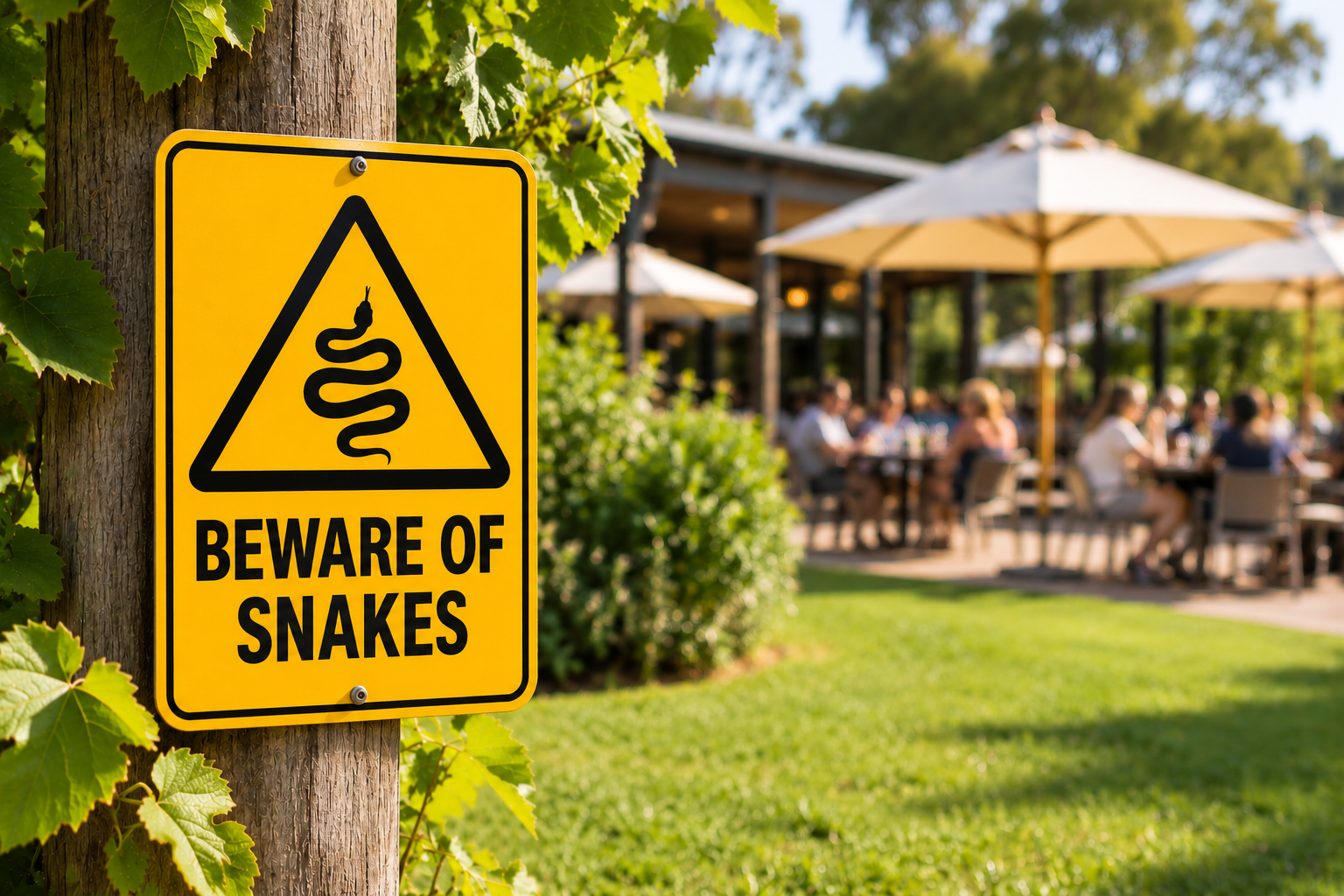
From snakes in beer gardens to spiders in storerooms, wildlife encounters can create unexpected safety risks for Australian hospitality venues, particularly during the warmer months.
A snake appearing in a busy beer garden can quickly disrupt an otherwise ordinary Saturday afternoon. Guests need to be moved, the area secured and someone needs to know who to call.
For Australian pubs, wineries, resorts and restaurants, encounters with wildlife are a practical workplace safety consideration. Some animals become more active during warmer weather, but unexpected visitors can turn up throughout the year.
Snakes, spiders, flying foxes and other animals can appear in gardens, storerooms, loading docks and even kitchens. Most encounters don't result in injury, but knowing how to respond helps protect staff, guests and the animals themselves.
When wildlife becomes a workplace safety issue
Hospitality venues often have the conditions that attract wildlife: landscaped gardens, outdoor dining areas, food waste, water sources and sheltered storage spaces.
Under Australian work health and safety laws, businesses must manage reasonably foreseeable risks to workers and others affected by their operations, so far as is reasonably practicable. This can include wildlife hazards, particularly at venues where encounters are more likely.
The risks vary by location. A regional winery may regularly encounter snakes, while a coastal resort might deal with flying foxes or other animals around its grounds.
Regular inspections of outdoor areas, storage facilities and staff procedures can help identify potential problems before they affect guests.
Snakes: What happens when one appears in a beer garden?
Snakes are generally more active during warmer months and may be found around gardens, lawns, outdoor storage areas and sheltered spaces.
Imagine a snake appearing near occupied tables during lunch service. The duty manager needs to act quickly without creating unnecessary alarm.
Staff should calmly direct guests away, stop access to the affected area and notify the manager on duty. Use barriers or signage where appropriate, and have someone observe the snake from a safe distance so a licensed handler can locate it. Keep the area closed until the risk has been assessed and it is safe to reopen.
Staff should never attempt to catch, relocate or kill a snake. Native snakes are protected under Australian wildlife laws, and interfering with them can be both dangerous and unlawful.
Keeping grass maintained, removing unnecessary clutter and managing outdoor storage can help reduce places where snakes may shelter.
If someone is bitten, call Triple Zero (000) immediately, keep them still and apply pressure immobilisation using appropriate first aid techniques. Do not wash the bite or attempt to catch the snake. St John Ambulance Australia's snake bite first aid guide explains the recommended response.
Spiders: Hidden hazards in everyday tasks
Outdoor furniture, garden equipment, storage sheds and rarely used spaces can provide shelter for spiders.
For hospitality staff, the risk often arises during routine work: retrieving equipment, moving tables, cleaning storage areas or reaching into spaces they cannot clearly see.
Redback spiders are found across much of Australia, while funnel-web spiders are primarily a concern in parts of eastern Australia. The species encountered will depend on the region.
Staff should wear appropriate protective equipment when handling stored items, check concealed spaces before reaching into them and keep storage areas organised.
First aid differs depending on the spider involved. Suspected funnel-web bites require emergency medical assistance and pressure immobilisation, while redback bites are treated differently. Staff should follow current first aid guidance rather than assuming all spider bites require the same treatment.
Bats and flying foxes: Look, but don't touch
Flying foxes are a familiar sight around fruiting trees and gardens, including those at resorts, wineries and other hospitality properties.
An injured or grounded bat may attract attention from guests or staff who want to help. However, bats can carry Australian bat lyssavirus, a rare but potentially fatal infection transmitted through bites or scratches.
Staff and guests should never attempt to handle a bat, even if it appears injured or unable to fly.
Keep people and pets away, restrict access if necessary and contact a trained wildlife rescuer.
If someone is bitten or scratched, immediately wash the wound thoroughly with soap and running water for at least 15 minutes and seek urgent medical attention, even if the injury appears minor. St John Ambulance Australia's bat bite or scratch first aid guide provides further instructions.
Possums and rodents: When wildlife becomes a food safety problem
Not every wildlife hazard involves a bite or sting.
Possums, rats and mice can enter kitchens, dry stores, roof spaces and waste areas, creating food contamination risks.
Under Standard 3.2.2 of the Australia New Zealand Food Standards Code, food businesses must take practical steps to prevent pests from entering food premises and address pest activity where it occurs.
For hospitality venues, this means keeping food storage secure, managing waste, sealing potential entry points and responding promptly to signs of pest activity.
Food that may have been contaminated by pests should not be served. Staff should report droppings, damaged packaging or evidence of animal activity so the issue can be investigated and addressed.
Native animals such as possums may require assistance from authorised wildlife professionals rather than conventional pest control methods.
Bees, wasps and other outdoor visitors
Outdoor dining areas can attract bees and wasps, particularly around food, sugary drinks and rubbish bins.
Most stings cause temporary discomfort, but some people can experience anaphylaxis, a severe allergic reaction requiring immediate treatment.
If anaphylaxis is suspected, help the person use their adrenaline autoinjector if available, follow their allergy action plan and call Triple Zero (000). Staff should know how to assist someone experiencing a severe allergic reaction and how to access first aid support.
Regularly emptying bins, removing food waste and checking for nests around outdoor structures can help reduce encounters. Where nests pose a risk, arrange appropriate professional assistance rather than asking staff to remove them.
A quick wildlife safety check for hospitality venues
Take a few minutes to review the areas and procedures that could expose staff or guests to wildlife.
Inspect gardens, lawns, outdoor dining areas and storage spaces for potential hazards.
Keep grass maintained, outdoor storage tidy and unnecessary clutter to a minimum.
Check outdoor furniture and equipment before moving or handling it.
Keep food storage secure, rubbish bins closed and waste areas clean.
Make sure staff know how to isolate an area and calmly move guests away from wildlife.
Keep contact details for local wildlife rescue services and licensed snake handlers accessible.
Check first aid kits have enough broad elastic bandages for pressure immobilisation.
Ensure staff know emergency procedures and where to find reliable first aid guidance.
Review incident reporting procedures, including when a serious injury or illness must be notified to the relevant WHS regulator.
St John Ambulance Australia's bites and stings quick guide is a useful reference for staff, covering common Australian bites and stings and the appropriate first aid responses.
Be prepared for unexpected visitors
Wildlife is part of the Australian environment, including the outdoor spaces that make many hospitality venues appealing. Regular checks, clear procedures and knowing when to call for professional help can make unexpected encounters safer for everyone.
Support safer workplaces with practical training. Explore Allara Global's work health and safety courses to help your team recognise workplace hazards, manage risks and respond appropriately.